Key Takeaways
- Platinum is naturally pure and rare, while white gold is made by mixing gold with metals like nickel and zinc.
- Platinum usually costs two to five times as much as white gold.
- White gold is cheaper and harder, but it can slowly lose thickness over time.
- Platinum is softer, but it lasts longer because it does not lose much metal over time.
- White gold needs regular polishing and replating, while platinum needs less care.
- Platinum is usually skin-friendly, while white gold may cause irritation for some people.
- A hallmark alone does not confirm purity, so get your jewellery certified to know what metal you have.
- Choose platinum if you want lasting quality, or choose white gold if you want a more affordable option.
Introduction
In today’s era, jewellery is not just seen as a symbol of prestige but is also a mark of fashion and style. When it comes to choosing the right metal, platinum vs white gold is one of the most common dilemmas buyers face. Furthermore, it’s one of the best gift choices for your loved ones, suiting every occasion, be it birthdays, engagements, weddings, or anniversaries.
While looking for jewellery, you would have to determine your budget and depending on that, you select the metal, colour, and design of your jewellery piece. With a plethora of variety, colours and designs already available in the market, selecting the perfect metal can often be a tedious task.
However, gold and platinum are the most commonly used metals. Both these metals have peculiar features. Colour golds such as rose, white, green, and grey have a snob appeal in the market while platinum is a rare metal with its own unique and chic appearance.
While both gold and platinum are aesthetically appealing, there are many other differences between white gold and platinum.
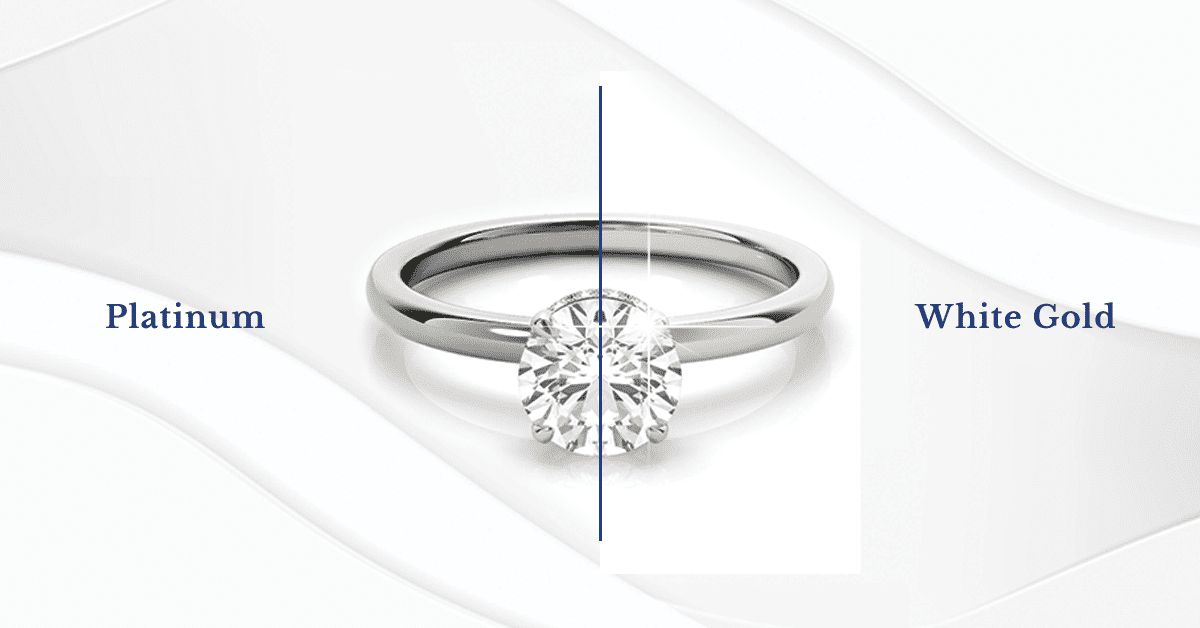
So, what’s better, white gold or platinum? This blog will walk you through a detailed comparison of Platinum vs White Gold and educate you to make the right choice!
What is Platinum?
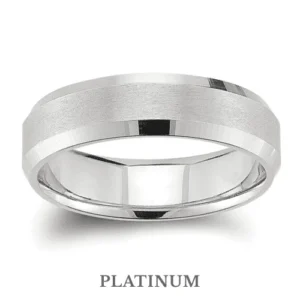
Platinum is one of the rarest metals used to make jewellery. Apart from exhibiting stupendous spark and lustre, platinum is also considered a symbol of prestige by many people.
Being a comparatively dense material, platinum is unlikely to bend over time. Though it is prone to scratches, serious dents rarely occur in platinum jewels. However, it needs to be polished every once in a while. Also, by pairing it with diamonds or any other gemstones, you can get a dazzling look.
Unlike gold, platinum is not measured in carats. Usually, it has a purity of 95-98% and is fortified by metals such as palladium and rhodium.
Because of its purity, lustre, and rarity, platinum is approximately two to five times more expensive than gold.
Let’s look at some pros and cons of platinum:
Pros
- Hypoallergenic (i.e. it causes no allergy to the skin).
- Rarer than gold.
- Highly Durable and heavier than Gold
- Looks elegant on rosy and fair skin
Cons
- Comparatively expensive.
- Requires polishing once in a while.
Want to check a detailed comparison of platinum vs white gold? Read on to know more!
What is White Gold?
Factor | Platinum | White Gold |
Composition | Naturally white metal, 95 to 98% pure | Yellow gold mixed with white metals like nickel, zinc, or palladium |
Colour | Naturally greyish-white, does not fade | Off-white or yellowish underneath; needs rhodium plating to get a bright white look |
Cost | Higher, roughly 2 to 5 times more than white gold | More budget-friendly upfront |
Durability | Very dense, and it does not wear down much over decades | Prone to thinning with regular wear |
Hardness | Comparatively softer, can lose sharp edges | Harder due to alloy metals, holds fine detailing better |
Maintenance | Occasional polishing only | Needs rhodium replating every few years |
Purity | 95% to 98% pure metal | 58% pure (14K) to 75% pure (18K) |
Skin friendliness | Hypoallergenic, safe for sensitive skin | May irritate skin due to nickel content |
Best suited for | Long-term wear, daily use, sensitive skin | Budget-conscious buyers, detailed craftsmanship, occasional wear |
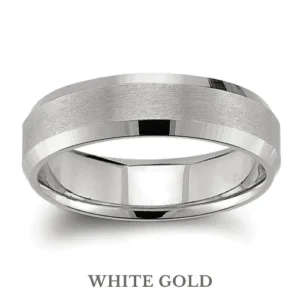
A popular alternative to platinum, white gold is an alloy made by combining pure gold with durable metals such as copper, zinc, nickel, and more. Since it’s a type of gold, it’s measured in karats, 14K white gold has 58% purity while 18K is almost 75% pure.
As white gold contains a mixture of other metals, it becomes comparatively more durable, scratch and dent resistant. Though the price of white gold would depend on the design of your jewellery material and the vendor, it is still way cheaper than platinum in its pure form.
Let’s check some of the pros and cons of white gold:
Pros
- Highly durable as it is blended with stronger metal
- Affordable
- Comparatively popular than platinum
Cons
- Can cause allergic reactions to people with sensitive skin.
- It needs polishing almost every year to prevent the white shine from fading
Platinum V/S White Gold: The Ultimate Comparison!
Cost
Platinum jewellery is more costly than white gold, often about two to five times more. This is because platinum is 95% or more pure, while white gold is 58% to 75% gold mixed with cheaper metals. So, for the same design, platinum has more precious metal by weight, which makes it cost more.
However, upfront cost is not the full picture. White gold needs rhodium replating every few years, and that extra cost can add up over ten years of use. Platinum needs only occasional polishing, so the price gap gets smaller over time, even if it never fully closes.
If you care most about price, white gold is the cheaper choice when you buy it. If you plan to keep it long-term, consider maintenance costs along with the purchase price.
You can track the live prices of Gold and Platinum in the International Market.
Maintenance
White gold gets its bright white look from a thin rhodium coating, not the gold itself. This coating wears down over time, usually within one to three years, based on how often you wear the piece. As it wears down, the warmer yellow color of the metal underneath starts to show around the edges. Replating makes the jewellery look new again, but you have to pay for it again over time.
Platinum does not need replating because its white colour is part of the metal, so nothing wears away. Over time, platinum develops a soft patina from tiny scratches, which many people like because it gives the piece a vintage look. You can always polish it again if you want to bring back its original shine.
In short, if you want less worry about your jewellery’s finish over the years, platinum needs less care. If you are fine with regular polishing and replating, white gold is just as good.
Response to Pressure
Though not as dense as platinum, white gold is comparatively stronger and offers more rigidity.
For instance, if you select a design that requires hand graving, square edges, or mill grain, white gold will represent these details more acutely than platinum.
Colour
As we know, platinum is naturally somewhat greyish-white in colour while white gold is a mixture of pure gold (usually yellow) with other metals such as palladium.
Due to this mixture of metals, white gold is usually off-white or greyish. However, this can be further corrected by rhodium plating ( i.e. application of a thin layer of rhodium) to transform it to a brighter white colour.
On the downside, this rhodium plating isn’t lifelong as it wears down in almost 3 years. Thus, white gold needs to be polished more frequently.
Durability
White gold and platinum are both durable metals however, they respond to pressure, impact, and scratches in quite different ways.
Platinum with its excellent density is less susceptible to wearing away easily. That means, even after decades of wearing platinum jewellery, it won’t lose much, if not at all, thickness. However, since it’s a softer metal, it may lose its high polish and sharp edges quite easily.
On the contrary, white gold is more prone to wear away. Have you ever noticed white gold jewellery becoming thin after a few years? This might be because of constant wearing or due to the quality of your jewels.
Purity
Platinum is typically utilized in its natural form (i.e. it has 95% to 98% of pure metal). On the contrary, white gold has almost 75% of original metal while the rest is a mixture of other metals to give it better shine and durability.
Thus, platinum is more expensive than white gold.
Hardness
Have you ever noticed that even though a white gold jewel is banged on a strong surface, it doesn’t break easily? This is because white gold is alloyed with stronger metals to transform it into a jewel. Thus, it becomes comparatively harder.
Platinum being a pure metal is comparatively softer.
Skin Friendly
While choosing jewels, you must check whether the person is allergic to any of the compositions of the metals.
As some people are allergic to nickel, white gold accessories will not be a wise choice for them as it contains a good proportion of nickel. Platinum being a pure metal doesn’t cause any allergy in most cases.
Thus, platinum is more skin-friendly.
Finishing
While white gold has an eye-snatching appeal but because of its tough properties, it cannot keep perfect details and a flawless look. Moreover, the rhodium plating is not durable for over 3 years, which makes polishing the jewel utmost necessary.
On the contrary, platinum with its tempting aura and purity appeals to the buyers. It offers finer details and an overall refined look.
Appearance
Both white gold and platinum offer stunning design, lustre, and beauty. Platinum rings have a greater demand in the market (for valuable occasions like weddings, engagements, and more) while white gold pendants, chains, and rings are also beloved by the masses. If you’re choosing a ring for a special occasion, you can also check these helpful tips for buying an engagement ring.
In short, individual preferences play a major role in deciding the suitable choice of metals!
How to Verify Platinum or White Gold Purity
Both platinum and white gold usually carry a stamp showing their purity, such as “PT950” for platinum or “18K” for white gold. But a hallmark does not always prove the purity, and it can wear away or be misrepresented over time.
A report from an independent gem lab checks the metal, confirms its purity, and shows if any other alloys were used. This matters most when buying costly jewellery, inheriting a piece, or selling it later.
SGL’s Jewellery Reports check the metal purity, weight, and craftsmanship of your platinum or white gold jewellery, giving you a record of what you own. For pieces with diamonds, our Diamond Reports check the stone itself, so you get certification for both the metal and the gem.
Conclusion
So, platinum vs white gold: which one is a better choice?
Well, there’s no clear-cut answer! Some might prefer platinum because of its beauty, purity, skin-friendliness, or even because of the social prestige it exhibits. While others might prefer white gold due to its long life, appearance, budget-friendliness, and more.
In short, by weighing the pros and cons of both metals you can arrive at suitable conclusions. Moreover, it also depends on your jewellery design and the occasion for which you wish to wear the jewellery.
SGL Labs is a leading gemological laboratory co-headquartered in London and New York. We offer services such as jewellery certification, and gemstone certification.