Key Takeaways
- Blue Sapphire (Neelam) is a strong and durable gemstone known for its deep blue colour, rarity, and beauty.
- The quality and value of a sapphire depend on its colour, clarity, cut, carat, origin, treatment, and certification.
- Popular Blue Sapphire varieties include Kashmir, Ceylon, Burma, and Thailand sapphires, and each has its own unique qualities.
- Natural sapphires often have small inclusions, but a gemological report is the most reliable way to confirm whether a sapphire is natural, treated, or lab-grown.
- Always choose a blue sapphire with a gemological report to verify its origin, quality, treatment, and authenticity.
Introduction
If you’ve been fascinated with the beauty of blue sapphires and want to learn more about them, you’re in the right spot.
The Neelam stone has been considered an essential as well as a mystical gem throughout the ages. People from ancient times have associated some sort of significance with sapphires.
For instance, the Persians believed the sky is a reflection of the blue sapphire stones. The Buddhists believed it helps in gaining spiritual enlightenment whereas the Hindus considered it to be the greatest gem, and used it while worshipping in temples to align the astrological forces.
Over the years, Neelam stone has been used as a piece of jewellery, a barrier against evil, and a symbol of love, good luck and fortune.
Read on to know more about these mystical blue stones!
What Does Blue Sapphire Mean?
Blue sapphire represents wisdom, loyalty, and protection. That makes it one of the most meaningful gemstones in the world. For thousands of years, people have valued blue sapphire for these qualities. Across different cultures, it is also associated with:
- Wisdom and truth: People believed sapphires symbolized wisdom and truth, so ancient scholars and royals wore sapphires to sharpen their judgement and guard against deceit.
- Loyalty and commitment: Blue sapphire remains a popular choice for engagement rings because it symbolizes loyalty and commitment, including in royal jewellery traditions.
- Spiritual clarity: In Vedic tradition, blue sapphire (Neelam) is associated with the third eye chakra and is believed to improve focus and intuition.
- Protection and good fortune: People in many cultures believe sapphires protect them from negative energy and attract good fortune.
Origins
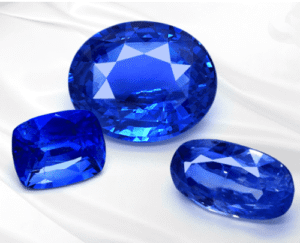
A significant portion of sapphires is found in Asian countries such as Sri Lanka, Myanmar, Afghanistan, Thailand, etc. They are also widely mined in Australia, Brazil and African nations such as Tanzania, Kenya, Madagascar, Nigeria, and more. Also, the Montana mine in the US is emerging as the leading producer of sapphires.
Some places are widely known for producing a specific kind of sapphire. For instance, Sri Lanka is considered to produce the finest blue sapphire ever. Recently, a 1,404-carat sapphire, The Star of Adam, was discovered in a mine in Sri Lanka. It is the largest sapphire to be discovered to date.
Chemical Composition of Blue Sapphire Stone
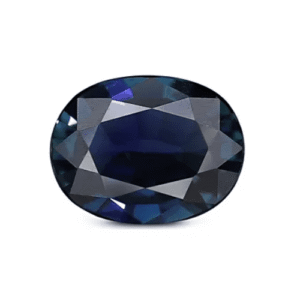
Sapphires originate from the mineral corundum, an abundant material of aluminium oxide and the second hardest substance after diamond. When the corundum crystals are growing deep inside the earth, they contact chemical impurities. These impurities then change the crystal’s colour.
For instance, if those impurities contain chromium, the crystal would transform into red, giving us, Ruby. Similarly, if the impurities contain iron and titanium, the crystal would transform into blue colour, the sapphire.
Depending upon the impurities in the material, the corundum can transform into any colour. In fact, orange, yellow, green, violet, grey and other such fancy coloured sapphires are quite popular.
Physical Properties
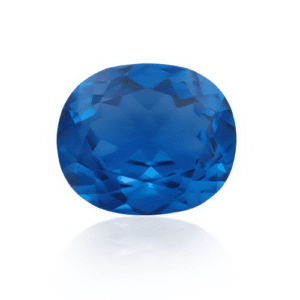
The mineral corundum is generally found in metamorphic rocks, pegmatites and alluvial gem gravel deposits. The sapphire crystals occur as barrel-shaped and double-pointed hexagonal pyramids.
They are extraordinarily hard and have a glass-like lustre. Its hardness on the Mohs scale is rated as 9. Further, its mean refractive index is between 1.712 and 1.740.
Price of Blue Sapphire Stone
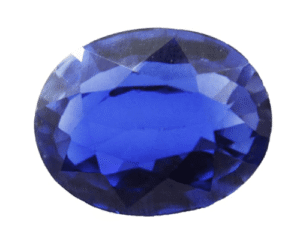
The 4 Cs – colour, cut, clarity and carat play a key role in determining the value of a diamond. However, in the case of gemstones like sapphires, their colour plays a prominent role in determining their value.
The colour is divided into three sub-types: hue, tone and the saturation of the stone. The hue is the spectral colour of the stone, tone determines the lightness or darkness of the hue and saturation defines the vividness and the intensity of the hue.
In simple terms, the most valuable sapphires are those which contain a vivid blue hue and a medium to medium-dark undertone.
The value of a sapphire increases even further when the colour of the stone is supported by good transparency, even distribution of colour, lack of inclusions and an even cut.
The prices of blue sapphires vary from stone to stone. For instance, in India, the value of Kashmir Blue sapphire (per carat) can be between Rs 50,000 to 5 lacs. On the other hand, the Royal Blue stone can range from 3 lacs to 10 lacs per carat.
Kashmir vs Burma vs Ceylon vs Thailand Sapphire: Quick Comparison
Feature | Kashmir | Burma (Myanmar) | Ceylon (Sri Lanka) | Thailand |
Colour | Rich cornflower blue | Rich royal/electric blue | Light to bright blue | Deep blue |
Clarity | Usually very good | Usually very good | Usually good | Usually good |
Rarity | Extremely rare (mining stopped in 1938) | Rare | Widely available | Common |
Typical Treatment | Often untreated | Mix of treated and untreated | Mix of treated and untreated | Usually heat-treated |
Best For | Collectors and special jewellery | Fine jewellery, investment | Everyday fine jewellery | Budget-friendly jewellery |
Types of Blue Sapphire Stone
1. The Burma (Myanmar) Blue
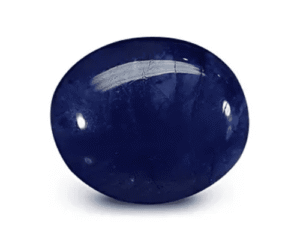
The blue sapphires mined from Burma are popular worldwide for their extraordinary quality and the even distribution of colour. These sapphires have blue and violet undertones which make them even more appealing. Further, the ‘electric blue colour’ sapphires are found exclusively in Burma. Collectors and buyers prize Burmese sapphires because they combine rich royal blue colour with consistent distribution and strong clarity.
2. The Ceylon (Sri Lanka) Blue
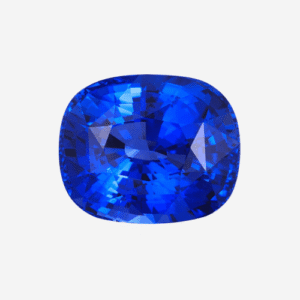
The sapphires found in Sri Lanka are superior in both beauty and quality. They have a light to medium tone and an uneven colour spread throughout the gemstone. Also, these sapphires have grey masking which results in a low saturation level. However, these factors do not undermine the value of these sapphires. In fact, their distinctive features and premium quality are appreciated worldwide.
The Ceylon blue sapphires have minimum dark extinctions which make them the best fit for use in jewellery. Also, the lighter shades of these blue sapphires are more clear and more brilliant.
3. The Kashmir Blue
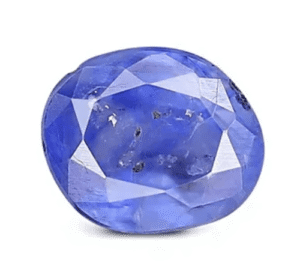
Kashmir sapphires are world-famous for their exceptional beauty and clarity. Collectors highly value Kashmir sapphires because mining ended in 1938, leaving only a limited historical supply of Kashmir sapphires. These gemstones continue to command strong demand and strong prices due to their rarity and exceptional quality.
4. The Thailand Blue
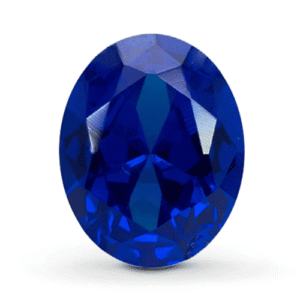
The blue sapphires from Thailand are known for their amazing quality. They have more than 90% clarity, a deep blue colour, and an outstanding cut. The inclusions are so minor that they’re not visible to the naked eye. Thai sapphires feature a deep blue colour and high clarity. Heat treatment usually enhances these qualities, making them a popular mid-range choice.
Significance of Blue Sapphire Stone
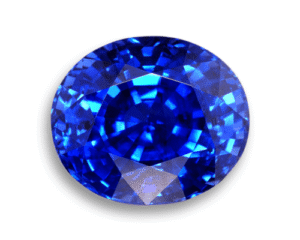
- In ancient times, Blue sapphire was considered to contain healing powers. It was beneficial in treating eye-related ailments and eliminating speech impairments. Also, it offered instant relief from chronic conditions such as nose bleeding, headaches, and fevers.
- As per Vedic astrology, gemstones possess the power to unlock chakras. In fact, the colour and the frequency of each gemstone resonates and amplifies the power of any chakras and aids in unlocking one’s true potential. Thus, the stones make the wearer more receptive to cosmic vibrations.
- The Blue sapphire is famously believed to evoke and stimulate the vital chakras to promote the healing of the body. Further, it can also connect one with their third eye and offer clarity in their thoughts, visions, ideas and perceptions.
How to check if blue sapphire suits you.
There is no scientific way to determine if blue sapphire suits you, many believe it to have energetic properties. Few things you consider while choosing a blue sapphire:
Birth Chart: According to astrology, wearing a Neelam stone can be useful for people whose birth chart shows a strong influence of Saturn.
Personal preferences: Choose a gemstone that you are drawn to & are attracted to because its colour & energy may be a good choice for you.
Skin Tone: People also believe that sapphire looks best on people with fair & medium skin tones.
Intentions: If you are seeking greater attention span, mental clarity & spiritual growth, blue sapphire can be a good choice.
Benefits of Wearing Neelam Stone
Blue sapphire has an abundance of benefits. Here are a few of them:
- Since ancient times, the blue sapphire has been considered powerful in averting bad luck and evil eyes. People believed that it is ruled by the planet Saturn and thus, it has a divine aura and a magnificent charm that empowers the wearer and protects them from all sorts of ills.
- Vedic astrology has long ago confirmed the healing and calming effect of the Neelam stone on the body and mind of the wearer. It is believed to improve focus, concentration, mental strength, decision-making power, etc. Further, it also offers mental relief by soothing the senses and helping the person gain self-control. Apart from this, it is also useful in improving the metabolism of the body and aiding in digestion.
- The stone is also believed to bring clarity to the mind, thoughts and visions of the wearer.
- Sapphires have been considered the symbol of love, fidelity and commitment and are commonly used in engagement and wedding rings.
- All in all, the gemstone is perceived to bring an improvement in the wearer’s fortune, luck, career, mind, body and overall well-being. Further, the stone can remove the hindrances and let the cosmic energies flow through the mind and the body of an individual.
How to test blue sapphire at home
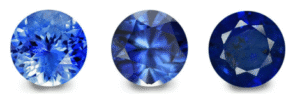
Here are a few reliable ways to distinguish blue sapphires from other gemstones:
1. Flashlight Test: Place the sapphire in a dark room and shine a flashlight on it. A real sapphire will reflect the same deep blue color. A fake one, often made of glass, may reflect multiple rainbow-like colors.
2. Air Bubble Check: Closely examine the stone from different angles. If you spot any air bubbles inside, it’s likely not a real sapphire.
3. Inclusions & Flaws: Natural sapphires often have minor flaws or inclusions. These imperfections actually indicate authenticity—so don’t worry if you spot some.
4. Breath Test: Breathe gently on the sapphire and observe how quickly the fog clears. In a genuine sapphire, the fog will vanish within 2 seconds. In contrast, synthetic stones may take more than 5 seconds to clear.
5. Certification: For 100% assurance, take the stone to a certified gemstone lab. A gemstone report will not only confirm authenticity but also provide a detailed scientific analysis of the stone.
Natural vs Lab-Grown Sapphire
A natural blue sapphire forms underground over millions of years. On the other hand, a lab-grown sapphire is created in a controlled environment and has the same chemical properties, but it is less rare and usually costs less.
Key Differences:
- Value: People usually pay much more for natural sapphires, especially ones that haven’t been treated, because of their rarity and natural origin.
- Certification: The best way to confirm if a sapphire is natural, treated, or lab-created is with an independent gemological report.
- Inclusions: Natural sapphires usually have tiny inclusions, while lab-grown sapphires often look much cleaner under magnification.
Conclusion
Blue sapphire is one of the most loved gemstones in the world because of its beauty, rarity, and the special meaning it has had for centuries. Whether you love its deep blue colour, its connection to wisdom and protection, or its astrological value, the most important thing is to choose a real one.
Before buying a blue sapphire, always check its origin, treatment, and quality with a certified gemstone lab. A proper gem report helps you buy with confidence and keeps your sapphire valuable for years.