Introduction
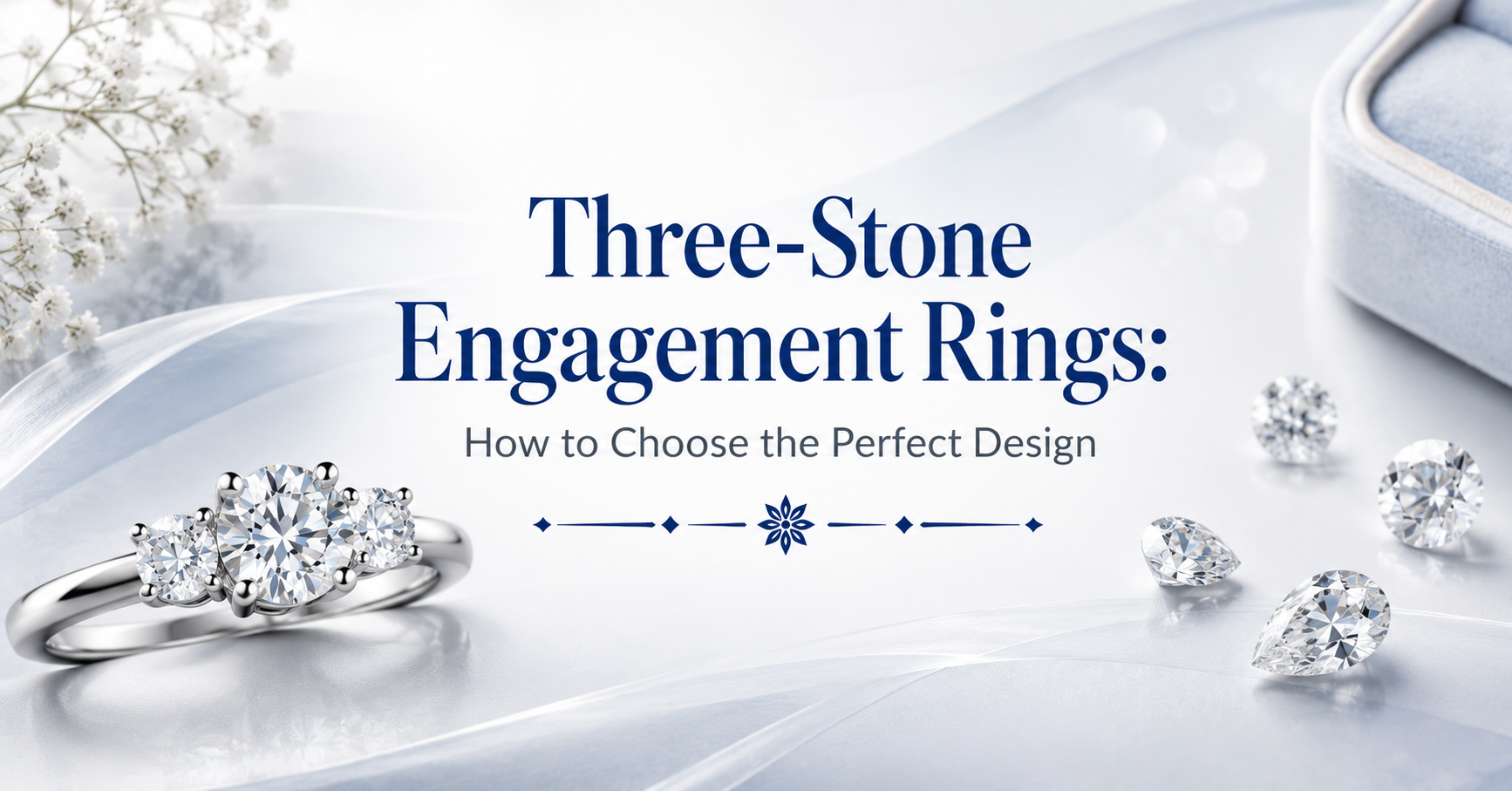
A three-stone engagement ring is one of the most timeless and meaningful engagement ring styles. Featuring a centre stone flanked by two side stones, this design offers exceptional brilliance, visual balance, and endless customization options.
Whether you prefer classic round diamonds, elegant oval cuts, or a combination of diamonds and coloured gemstones, a three-stone ring can be tailored to reflect your personal style. Beyond its beauty, this setting is valued for its symbolism and versatility, making it a popular choice among modern couples.
This guide explains everything you need to know, from understanding the design and choosing the right stone combination to selecting the ideal setting and avoiding common buying mistakes.
What Is a Three-Stone Engagement Ring?
Also known as a trilogy ring, a three-stone engagement ring features three gemstones mounted side by side. Traditionally, the centre stone is larger than the two side stones, although contemporary designs may feature three stones of equal size or other creative arrangements.
The three stones may consist of:
- Three natural diamonds
- Three lab-grown diamonds
- A combination of diamonds and coloured gemstones such as sapphires, emeralds, or rubies
The design offers greater flexibility than a solitaire ring, allowing buyers to personalise the ring according to their preferences while maintaining a timeless appearance.
The Meaning Behind a Three-Stone Ring
One of the reasons this style has remained popular for generations is its symbolism.
The three stones are commonly believed to represent:
- Past: The memories and experiences that built the relationship.
- Present: The love and commitment shared today.
- Future: The life and journey the couple will build together.
Some couples also associate the three stones with love, friendship, and fidelity, while others simply appreciate the balanced and elegant design.
Regardless of interpretation, the symbolism adds emotional significance that makes the ring even more meaningful.
Popular Three-Stone Engagement Ring Designs
One of the greatest advantages of a three-stone ring is the wide variety of design options available.
Graduated Design
This is the most traditional style, where the centre stone is noticeably larger than the two side stones.
Typically:
- Centre stone: 1.5–2 times larger than each side stone
- Creates a strong focal point
- Offers a timeless and elegant appearance
Matched Design
In a matched design, all three stones appear visually balanced.
Although the centre stone may still be slightly larger, the difference is subtle, creating a harmonious and symmetrical look.
This style suits buyers who prefer understated elegance.
Same-Shape Design
Using identical diamond shapes creates consistency and symmetry.
- Popular combinations include:
- Three Round Brilliant diamonds
- Three Oval diamonds
- Three Cushion Cut diamonds
- Three Emerald Cut diamonds
This style delivers a clean and sophisticated appearance.
Mixed-Shape Design
Combining different diamond shapes creates a distinctive look.
Popular combinations include:
- Round centre with pear-shaped sides
- Oval centre with trillion side stones
- Emerald centre with tapered baguettes
- Cushion centre with half-moon diamonds
Mixed-shape designs add character while highlighting the centre diamond.
Coloured Gemstone Accents
Diamonds paired with coloured gemstones create a unique design.
Popular choices include:
- Sapphire side stones
- Emerald side stones
- Ruby accents
This option allows buyers to add personal meaning or birthstones while maintaining the elegance of a three-stone ring.
Key Design Elements to Consider
Selecting a three-stone engagement ring involves more than choosing three beautiful stones. Every design element should work together to create balance and comfort.
Centre Stone Shape
The centre stone is the focal point of the ring.
Popular choices include:
- Round Brilliant
- Oval
- Princess
- Cushion
- Emerald
- Pear
Each shape creates a different visual effect.
For example:
- Oval and pear shapes can make the finger appear longer.
- Round diamonds maximise brilliance.
- Emerald cuts emphasise clarity and elegance.
Choose a shape that matches your partner’s style rather than following trends.
Side Stone Selection
Side stones should complement the centre stone without overpowering it.
A common design guideline is for each side stone to measure approximately 40–60% of the centre stone’s carat weight, although the ideal proportion depends on the diamond shape and overall design.
For example:
- 1.00 ct centre diamond
- Two side stones between approximately 0.35–0.50 ct each
Proper proportions create a balanced and visually appealing ring.
Metal Choice
The metal influences both the appearance and durability of the ring.
Popular options include:
White Gold
- Bright modern appearance
- Enhances colourless diamonds
- More affordable than platinum
Yellow Gold
- Traditional and timeless
- Complements warmer diamond colours
- Increasingly popular in vintage-inspired designs
Rose Gold
- Romantic appearance
- Distinctive contemporary style
Platinum
- Naturally white
- Extremely durable
- Excellent for everyday wear
- Premium price point
Setting Style
The setting affects both the appearance and security of the stones.
Setting Best For
- Prong Maximum brilliance and classic appearance
- Bezel Modern design with excellent stone protection
- Channel Additional security for matching side stones
- Pavé Extra sparkle along the band
The ideal setting depends on your lifestyle, aesthetic preference, and how frequently the ring will be worn.
If you’re comparing different ring styles or planning your purchase, our Diamond Buying Guide covers the key factors to consider before choosing the perfect diamond.
How to Choose the Right Three-Stone Engagement Ring
A structured approach makes choosing the perfect ring much easier.
Step 1: Consider Finger Size
The ring should complement the wearer’s hand.
Larger hands can accommodate wider designs, while smaller hands often suit more delicate proportions.
Step 2: Choose the Centre Stone
Select the:
- Diamond shape
- Carat weight
- Cut quality
- Colour
- Clarity
The centre stone determines the overall character of the ring.
Step 3: Select Matching Side Stones
Choose side stones that:
- Maintain symmetry
- Complement the centre stone
- Create proper visual balance
They should enhance—not compete with—the centre diamond.
Step 4: Finalise the Ring Design
Consider:
- Ring profile
- Comfort
- Wedding band compatibility
- Overall durability
Custom-made rings often follow this exact process, ensuring every element works together seamlessly.
If you’re shopping for a proposal ring, our guide on 7 Tips for Buying an Engagement Ring covers practical advice to help you choose a ring that suits your budget, style, and long-term preferences.
Natural vs Lab-Grown Diamonds
Today’s buyers often compare natural and lab-grown diamonds before making a purchase.
Both have the same chemical composition, hardness, brilliance, and optical properties. The primary differences lie in their origin, rarity, pricing, and long-term market value.
Factor | Natural Diamond | Lab-Grown Diamond |
Origin | Formed naturally over billions of years | Created in a laboratory |
Appearance | Identical to lab-grown diamonds | Identical to natural diamonds |
Hardness | Same | Same |
Price | Higher | Generally more affordable |
Availability | Limited | Readily available |
Rarity | Naturally rare | Manufactured as required |
Long-term Value | Generally stronger value retention | Market values continue to evolve |
Regardless of whether you choose a natural or lab-grown diamond, always purchase one accompanied by an independent Diamond Report from a recognised gemological laboratory. A trusted grading report verifies the diamond’s authenticity, quality, and key characteristics, helping you make a more informed purchase.
Common Mistakes to Avoid
When buying a three-stone engagement ring, avoid these common mistakes:
- Choosing side stones that overpower the centre diamond.
- Ignoring finger size and overall proportions.
- Selecting a wedding band that does not fit comfortably alongside the engagement ring.
- Focusing only on carat weight while overlooking cut quality.
- Choosing metal based solely on price instead of durability and appearance.
- Purchasing a diamond without an independent grading report.
Making informed decisions helps ensure both beauty and long-term satisfaction.
If you’re purchasing a finished three-stone engagement ring, consider getting a Jewellery Report. It helps verify the quality, authenticity, and overall characteristics of the complete piece.
Caring for Your Three-Stone Engagement Ring
Proper care keeps your ring beautiful and secure.
To maintain its condition:
Remove the ring before heavy exercise, gardening, or household cleaning.
- Store it separately to prevent scratches.
- Clean it regularly using warm water, mild soap, and a soft brush.
- Have the setting professionally inspected once a year.
- Schedule professional cleaning every six to twelve months.
- Handle softer gemstones such as emeralds with additional care.
- Routine maintenance helps preserve both the appearance and security of the stones.
Conclusion
For added peace of mind, consider choosing a certified diamond with Laser Inscription. It allows you to match the diamond with its grading report, making identification and verification easier.
A three-stone engagement ring does more than look beautiful. It tells the story of your journey together and offers many design options.
Choosing the right combination of stone shapes, proportions, metal, and setting ensures the ring reflects your personal style and remains timeless for years to come.
Whether you prefer natural or lab-grown diamonds, always purchase jewellery accompanied by an independent grading report to verify its quality and authenticity.
At SGL, we help consumers make informed buying decisions through trusted jewellery and diamond certification. A recognised grading report provides confidence in the quality and characteristics of your diamond, allowing you to purchase with greater peace of mind.
FAQs
What is the ideal size ratio for a three-stone engagement ring?
A commonly recommended proportion is for each side stone to be approximately 40–60% of the centre stone’s size, although the ideal ratio depends on the chosen diamond shape and overall design.
Can coloured gemstones be used in a three-stone engagement ring?
Yes. Sapphires, emeralds, rubies, and other gemstones are frequently paired with diamonds to create a personalised and distinctive design.
Should I choose a natural or lab-grown diamond?
Both options are real diamonds with identical physical and optical properties. The decision typically depends on your budget, rarity preference, and long-term value considerations.
Which diamond shape is best for a three-stone ring?
There is no single best option. Round, oval, cushion, emerald, and princess cuts are among the most popular choices, each offering a unique appearance.
Is a grading report important when buying a three-stone engagement ring?
Yes. A grading report from an independent gemological laboratory verifies the diamond’s key quality characteristics, including cut, colour, clarity, and carat weight, helping buyers make informed purchasing decisions.
Shatrughan Vishwakarma
Shatrughan Vishwakarma is an experienced Gems & Jewellery professional with 12+ years of expertise in Quality Assurance, Quality Control, and Education. Recognized for his technical knowledge and mentorship, he is committed to advancing quality standards and nurturing future industry professionals.