Key Takeaways
- Lab-grown diamonds are real diamonds that have the same physical, chemical, and optical properties as natural diamonds
- Manufacturers use HPHT and CVD methods to create lab-grown diamonds by recreating the natural diamond formation process in a controlled environment.
- Lab-grown diamonds offer a more affordable, ethical, and sustainable alternative to natural diamonds without compromising on quality or durability.
- Lab-created diamonds share the same durability and 4Cs as natural diamonds, but they differ in how they are made, their price, and their availability.
- Always choose a certified lab-grown diamond with a trusted grading report so you can verify its quality and authenticity.
Introduction
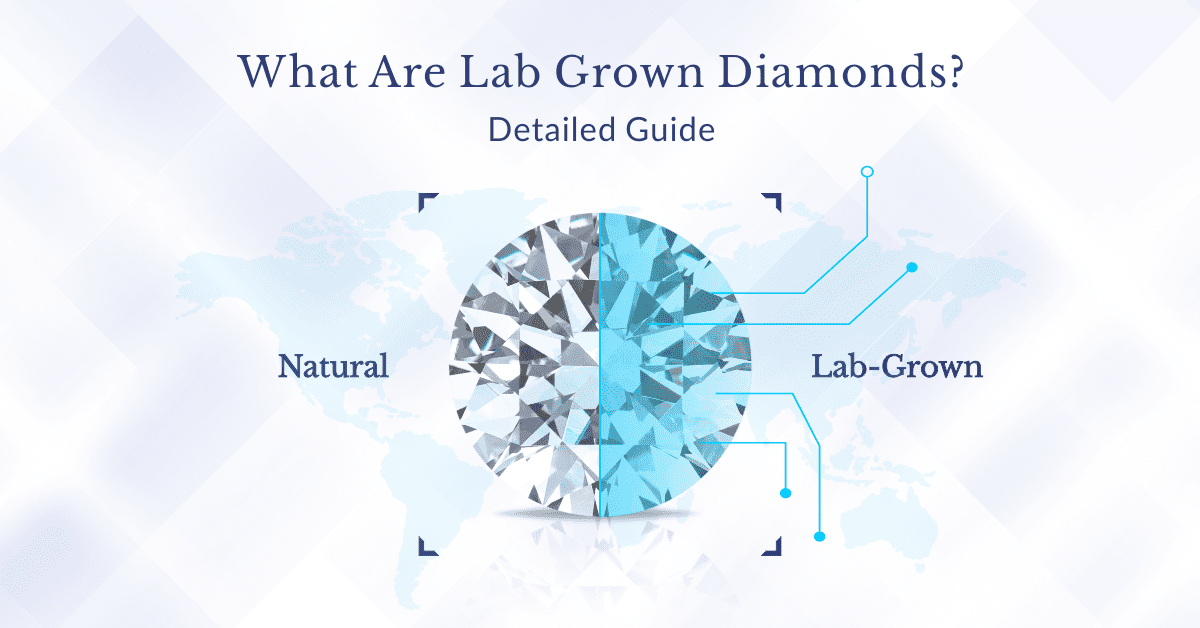
Lab-Grown Diamond or lab-created diamond, as the name suggests, is a diamond grown in a laboratory. These diamonds are grown by recreating the same environment that fosters the development of natural diamonds beneath the earth’s crust. Advanced technological processes are used for the same.
High pressure and heat treatment are applied to develop lab-created diamonds. Like natural diamonds, even lab-grown diamonds consist of 100% carbon atoms arranged in the form of a diamond crystal structure. As these diamonds are made of the same material, i.e. carbon, they exhibit the same physical, chemical and optical characteristics as that of a naturally mined diamond.
Can Lab-Grown Diamonds Be Called As Real Diamonds?
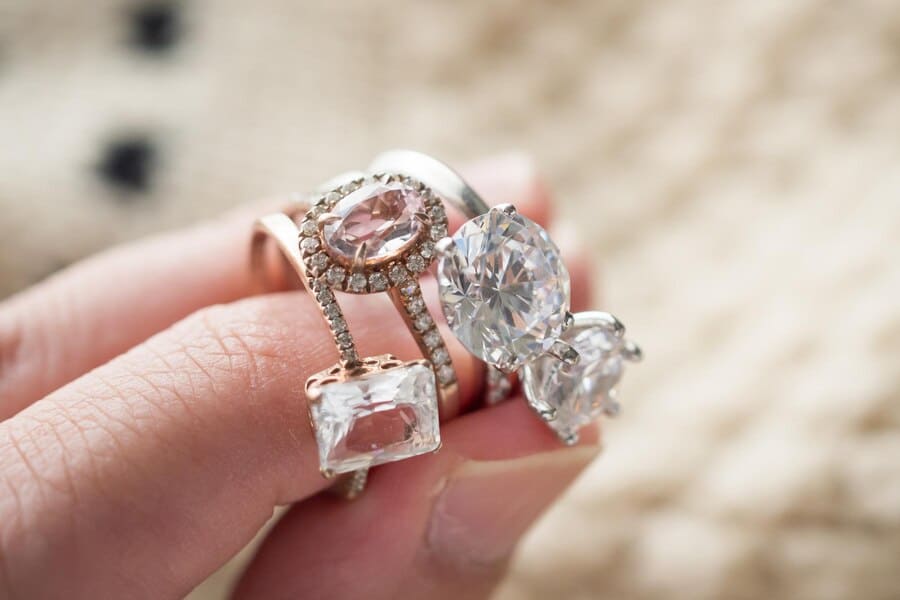
Yes, lab-grown diamonds are real diamonds. Lab-grown diamonds have the same characteristics as real mined diamonds. They have the same crystal structure, sparkle, fire, and scintillation as that of a natural diamond. These diamonds are as durable as natural diamonds.
Even lab-created diamonds are becoming a prominent choice for engagement rings and other jewellery gifts. These man-made diamonds are also graded and certified to equal standards as naturally mined diamonds.
How Are Lab-Grown Diamonds Made?
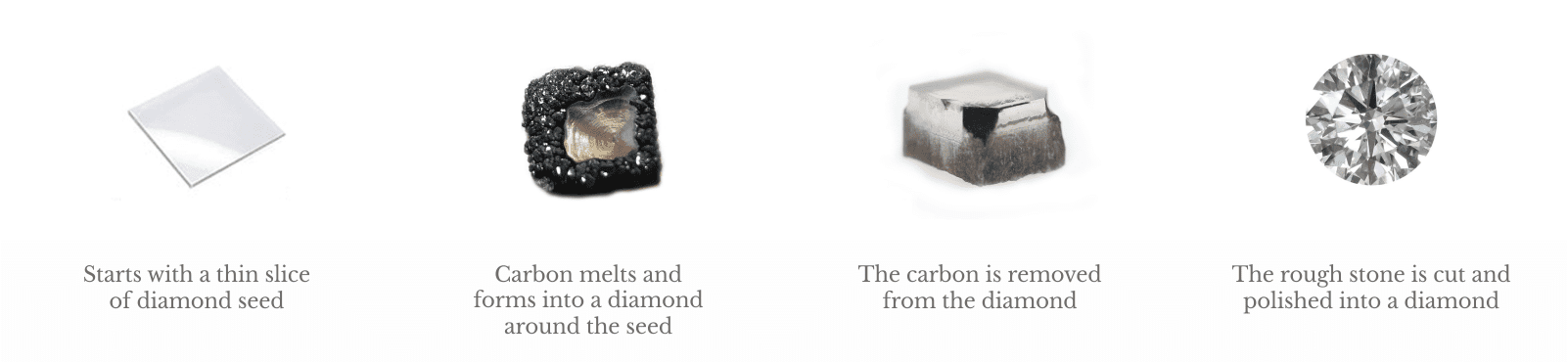
The main difference between a lab-grown and a natural diamond is where and how they are made. A natural diamond takes billions of years to form deep inside the Earth. Heat and pressure slowly turn carbon into a diamond, and volcanoes bring it closer to the surface. A lab-grown diamond goes through the same change as a natural diamond. Carbon turns into a diamond crystal inside a lab in a few days or weeks using technology that recreates the same natural conditions.
Both processes start with a small diamond seed. They both create a diamond made of 100% pure carbon with the same crystal structure as a mined diamond. The only real difference is where they are made and how long they take. The material is exactly the same. Laboratories use two methods to grow diamonds: High-Pressure High-Temperature (HPHT) and Chemical Vapor Deposition (CVD).
High-Pressure High-Temperature (HPHT)
The HPHT method is the oldest way to grow diamonds in a lab. It recreates the same conditions found deep inside the Earth. The process starts with a small diamond seed and a source of pure carbon inside a chamber. The chamber is exposed to around 1.5 million pounds per square inch of pressure. It also reaches a temperature of about 1,500°C.
Laboratories use one of three types of presses to create this pressure. They use a belt press, a cubic press, or a split-sphere (BARS) press. Under these extreme conditions, the carbon source melts and starts to form around the diamond seed. It grows one layer at a time until it becomes a rough diamond. The diamond is then cooled and taken out for cutting and polishing.
HPHT is also commonly used after the CVD process to improve a diamond’s color. It removes unwanted tints and makes the diamond clearer.
Chemical Vapor Deposition (CVD)
The CVD method uses a different process. Instead of using extreme pressure, it forms a diamond from carbon-rich gas inside a vacuum chamber. The process starts with a thin diamond seed inside the chamber. It is then filled with methane and other carbon-containing gases and heated to about 800°C.
The gases are turned into plasma using microwave technology. This breaks down the gas molecules, releasing pure carbon atoms. These atoms settle on the diamond seed and slowly form the diamond, one layer at a time. In a few days or weeks, this process forms a rough diamond. After that, the diamond is cut, polished, and graded just like a natural diamond.
Today, CVD is the most widely used method for growing gem-quality lab-grown diamonds. It allows manufacturers more control over the diamond’s growth and purity.
Want to know how HPHT and CVD diamonds are identified and certified? Read our guide on The Rise of Lab-Grown Diamonds to learn about diamond screening, certification, and industry trends.
Benefits of Lab-Grown Diamonds
Lab-created diamonds sometimes offer better quality as they are developed in a fully controllable environment and rigorously monitored. Here are some of the top benefits of lab-grown diamonds.
1. Affordability

Lab-grown diamonds cost 70 to 90% less than natural diamonds of the same size and quality. This gives buyers the option to choose a larger diamond or a higher grade within the same budget.
2. Eco-friendly Alternative

Mining has a severe effect on the environment. It can cause massive damage to the land and fossil fuels. Since lab-grown diamonds grow in the lab, they do not cause any damage to the environment and prove to be a sustainable choice.
Since these diamonds are grown in the lab using CVD and HPHT techniques, it is easier to keep up with the demand without compromising on quality.
3. Good Purity & Fewer Defects

Unlike mined diamonds, man-made diamonds do not have any dirt, and impurities ingrained in them. While diamonds beneath the earth grow under extreme conditions, lab-created diamonds grow in a controllable environment, having minimal defects in the crystal structure.
The top-notch purity of the lab-grown diamond makes it brighter, shinier, and better.
4. Ethical Sourcing
Lab-grown diamonds are made in a controlled facility rather than mined. This helps reduce the labour and sourcing concerns linked to traditional diamond mining.
Lab-Grown vs Natural Diamond: Side-by-Side Comparison
Characteristic | Lab-Grown Diamond | Natural Diamond |
Composition | Pure crystalline carbon | Pure crystalline carbon |
Durability | 10 on the Mohs scale | 10 on the Mohs scale |
Brilliance | Refractive index ranges from 2.417 to 2.419 | Refractive index ranges from 2.417 to 2.419 |
Color | Primarily colorless, but also available in vivid color options | Primarily colorless, but also found naturally in colours like pink, blue, and yellow. |
Grading | Graded on cut, color, clarity, and carat | Graded on cut, color, clarity, and carat |
Certification | Certified by reputable gemological institutions | Certified by reputable gemological institutions |
Origin | Grown in controlled laboratories over several days to weeks, then cut and polished | Formed deep within the Earth over billions of years, then mined, cut, and polished |
Rarity | Can be made in larger quantities as technology advances. | Available in limited quantities because they occur naturally. |
Price | Lower cost due to greater availability | Higher cost due to mining, rarity, and limited supply |
Difference Between Lab-Grown Diamond and Natural Diamond
1. Durability

Both lab-grown diamonds and natural diamonds are made of carbon. Lab-grown diamonds also have a rating of 10 on the Mohs hardness scale.
When it comes to durability, both are equally durable. reasons – the demand-supply gap and the process of manufacturing. Mining natural diamonds takes up a huge chunk of expense. Since lab-grown diamonds do not go through the process of mining, the manufacturing cost is significantly low.
Because of the shorter supply chain, lab-grown diamonds are 30-40% less expensive than their counterparts. This means that you can buy more quantities of lab-grown diamond in the same budget.
2.Price

The price of lab-grown diamonds is comparatively lesser than those acquired from nature. This is because natural diamonds require mining and other procedures before being ready for cutting and polishing. But in the case of lab-grown diamonds, one eliminates the need for miners and distributors.
Another reason why the price varies is that natural diamonds are produced according to nature’s wishes. Thus, giving people the option of getting the rarest diamonds will naturally be highly expensive. But in the case of lab-grown diamonds, you can get them in abundance, so you limit the chances of it being rare.
3. Origin

Natural diamonds are mined from beneath the surface of the earth. With years of pressure and heat, the carbon solidifies to form diamonds.
On the other hand, lab-grown diamonds are grown in the lab through deposition techniques. Even though the process of cutting and polishing remains the same in this case, only the process of the formation of the diamond is different.
How Are Lab-Grown Diamonds Identified?
To the naked eye, lab-grown and natural diamonds look exactly the same. Even trained jewellers need special equipment to tell them apart. They can only be identified using advanced gemological tools, such as:
- Spectroscopy: It detects tiny trace elements and growth patterns that are unique to lab-grown diamonds.
- UV fluorescence testing: It shows fluorescence patterns that help tell lab-grown and natural diamonds apart.
- Diamond growth-pattern imaging: It detects internal growth patterns left by the CVD or HPHT process.
This is why you should always buy a lab-grown diamond with a certified report from an accredited gemological lab. An SGL lab-grown diamond report uses this combination of tools to confirm the diamond’s origin and grade it accurately. This gives buyers confidence that they know exactly what they are buying.
How Are lab-grown diamonds graded?
Lab-grown diamonds are graded in the same way as mined diamonds are. Just like real diamonds, lab-made diamonds will vary in their 4C’s and quality and can range from poor to outstanding.
Our lab-grown diamond report is a thorough assessment of the lab-created diamond and is safeguarded by a security system that includes several layers of protection. The entire process from start to finish is safe, secure and guaranteed to be fair.
Are Lab-Grown Diamonds Worth It?
The right choice depends on your priorities, whether that’s your budget, ethics or the appeal of natural rarity. Both are 100% real diamonds, so the difference isn’t authenticity. It’s about what matters most to you.
Choose lab-grown if: you want a larger diamond within your budget, prefer ethically sourced and traceable diamonds, or you want a wider range of shapes, sizes, and colours at a more affordable prices.
Choose natural if: you prefer the natural rarity and origin of mined diamonds, or long-term resale value is important to you. Natural diamonds generally have better resale value because they are less common.
Whether you choose a lab-grown or natural diamond, always ask for a certified grading report. A certified grading report from an accredited lab like SGL verifies the diamond’s origin, quality, and 4Cs. It gives you confidence that you know exactly what you’re paying for. If you’re new to diamond grading, learn more about the 4Cs and how they affect a diamond’s quality.