Key Takeaways
- Choose a round brilliant diamond if you want the most sparkle, because their 58 facets reflect light beautifully.
- Fancy cut diamonds come in unique shapes like oval, cushion, emerald, pear, princess, and marquise, which often cost less per carat.
- Round brilliant diamonds usually cost more, but many fancy cuts look bigger at the same carat weight.
- Choose the diamond cut that suits your style, budget, and lifestyle. Each cut gives you a different look, sparkle, and durability.
- Choose a certified diamond and check its grading report before buying to confirm its quality and authenticity.
Introduction
In a 1949 stage musical, Marilyn Monroe playfully captures the reality behind the glitz and value of diamonds in her famous jazz song “Diamonds are a girl’s best friend.” Over the years, this phrase has embodied the reasons why diamonds are loved even today.
Lately, almost all jewellery stores flaunt stunning, unique diamond pieces in their collections. Today, choosing the right diamond has never been easier, especially when the decisive factor is the diamond’s cut. The sparkle of your diamond depends on how effectively the polished surfaces interact with light.
When out shopping for diamonds, you’ll come across two main cuts: fancy cuts and round brilliant cuts. Both have unique brilliance, but they differ in structure, light sensitivity, and overall brilliance.
Let’s dive into the key differences between round brilliant vs fancy cut diamonds to help you choose one that fits your style, budget, and expectations.
What is Round Brilliant?
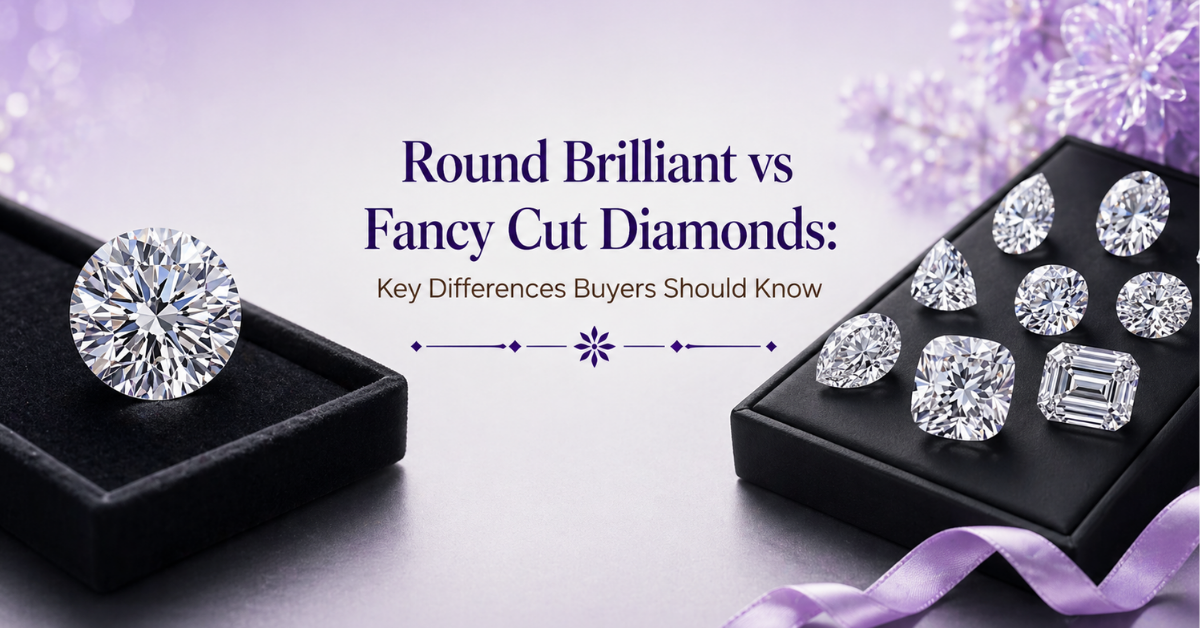
A round brilliant cut diamond has 58 facets, with 33 on the crown and 25 on the pavilion. It makes up about 70% to 80% of all diamonds sold worldwide. Making this the most popular type of diamond cut on the market. This design maximizes the stone’s sparkle, making the light work better. These brilliant cuts are the only diamond form with Gemmological Institute of America cut grades because of their standard design.
What are Fancy Cut Diamonds?
Fancy-cut diamonds are non-round diamonds, each unique in style. Asscher, emerald, pear, marquise, radiant, and cushion are some of the unique fancy cut diamonds available.
While round diamonds focus on a single pattern of sparkle, fancy cuts use two different methods to handle light.
- The Step Cut (like Emerald or Asscher) uses long, flat facets that create a hall of mirrors effect. It creates clean, elegant flashes of light rather than loud sparkle.
- The Brilliant Cut (like Pear or Cushion) uses small, kite shaped facets to mimic the round diamond’s fire, giving a glitter effect.
The choice comes down to whether you want a sophisticated, mirror-like glow or a more sparkling finish.
Comparison: Round Brilliant vs Fancy Cuts
To understand what makes the diamond alluring, let us quickly compare both cuts side by side in terms of pricing, sparkle, and overall diamond brilliance:
Feature | Round Brilliant Diamonds | Fancy Cut Diamonds |
Shape | Perfect circular outline | Oval, princess, cushion, emerald, pear, marquise, radiant, Asscher |
Facet Design | Standardized 58 facets | Varies by shape |
Sparkle | Strong brilliance and fire | Depends on the cut style |
Price Trend | Higher cost per carat | Often lower cost per carat |
Visual Style | Classic and symmetrical | Distinctive and varied |
How Cut Influences Sparkle
When you look at a diamond, its brightness depends on how much light it reflect through its cut. The round brilliant cut uses precise symmetry to maximize light reflection. This arrangement of the facets creates a stunning display of colors and glitter that remains visible from all angles.
On the flip side, light reflects differently from fancy cuts. Step cuts like emerald and Asscher reflect light like a mirror, while oval, cushion, and radiant brilliant cuts reflect light in bursts. Thus, the shape of the gemstone is crucial to its beauty, as each cut affects its appearance.
Budget and Diamond Size Perception
Round diamonds are typically more expensive. This is because craftsmen need to remove more of the rough diamond to achieve the perfect circular shape.
On the other hand, you will find that the fancy cuts retain more of the stone’s original shape. As a result, fancy cuts will cost you 15-40% less per carat.
Some fancy shapes appear larger than they actually are. Diamonds in the shape of an oval, pear, or marquise extend across the finger and appear longer than a round diamond of the same carat. If you are buying within a fixed budget, fancy cuts are the ideal choice as they can make items appear larger.
For those exploring alternative options, you can also review lab-grown diamond reports to better understand quality and pricing differences.
Pros and Cons of Round vs Fancy Cut Diamonds
If you want to buy a diamond for loved ones, you must consider the benefits and drawbacks of these diamonds:
Aspect | Round Brilliant Diamond | Fancy-Shape Diamond |
Rough Yield | Cutting the round shape wastes more rough diamond material. | Cutting preserves more stone, decreasing waste and cost. |
Appearance on Hand | Classic and symmetrical, but smaller than extended shapes. | Oval and marquise forms help elongate fingers. |
Inclusion Visibility | Strong brilliance can make internal inclusions easier to notice. | Shape affects inclusion visibility; some highlight, others hide. |
Style | Traditional and widely recognized. | Offers more unique personalized jewellery designs. |
Choosing the Shape That Fits Your Style and Lifestyle
Round brilliant-cut diamonds remain the most popular choice. Their smooth, symmetrical design goes well with many types of rings. Moreover, the lack of sharp edges makes this cut durable enough for regular use jewellery.
If you want to understand round diamonds in more depth, you can also explore how they are evaluated.
Your diamond shape must align with your personal lifestyle choices. While cushion cut provides a soft vintage like appearance, the princess cut delivers a more contemporary geometric look. Trends may fluctuate, but these silhouettes have a certain timeless appeal to fine jewellery.
Beyond aesthetics, consider functional durability. Shapes with pointed corners, specifically the Princess and Marquise, are generally vulnerable to chipping. For active lifestyles, these require protective “V-prong” or bezel settings. Choosing a diamond involves balancing this visual impact with daily wearability to protect your investment and ensure good value for money.
Conclusion
While diamonds will always remain timeliness, purchase one that reflects your choices. Round offers the classic timeless aesthetic, whereas a fancy cut can be more personalized and uniquely you.
Ultimately, the best diamond is the one that balances price, size, and sparkle to match your personal style.
At SGL Labs, we bring clarity to your purchase through transparent, expert grading. You can verify your diamond’s quality and authenticity through a detailed diamond certification report. Every stone tells a story; ensure yours is backed by a reliable certification that proves its purity and market value. Contact us today to verify your collection.
To get a broader understanding, you can explore different diamond shapes and cuts in detail.
FAQs
Which diamond cut sparkles the most?
The facets of round brilliant diamonds are set up such that they catch most of the light that hits them, which is why they usually shine the most. This exact symmetry makes the diamond shine and light up more brightly than other decorative shapes.
Are diamonds with fancy cuts less expensive than round diamonds?
Fancy-cut diamonds are sometimes cheaper per carat because their shapes keep more of the rough stone’s natural shape after being cut. Because of this efficiency, purchasers may usually acquire a bigger diamond for the same amount of money.
Do diamonds with interesting cutting look bigger than round diamonds?
Some unusual shapes, such as oval, pear, and marquise, look bigger than round diamonds that weigh the same. Their lengthy form makes the contour of the finger longer.